

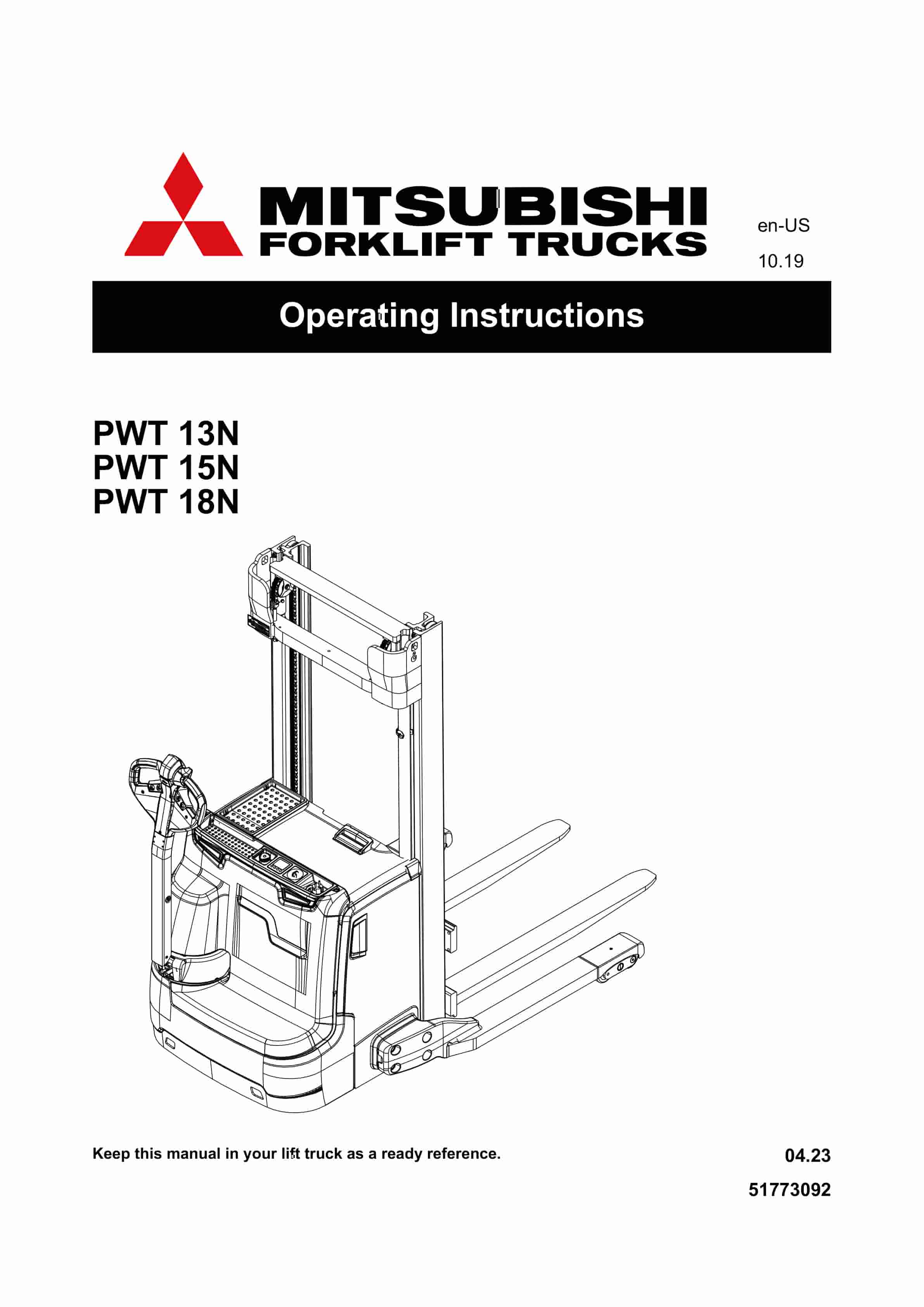
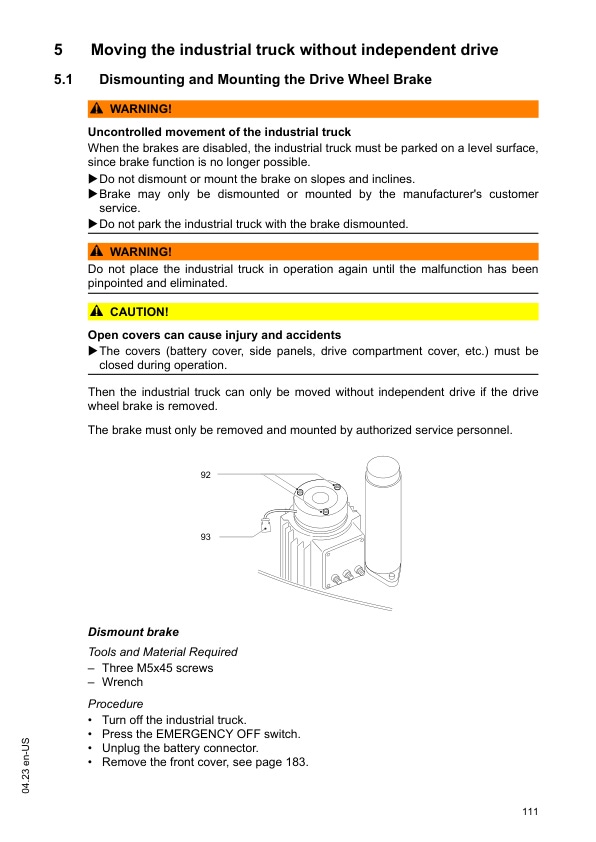
Mitsubishi PWT 13N, PWT 15N, PWT 18N Operating Instructions 51773092
$30.00
- Type Of Manual: Operating Instructions
- Manual ID: 51773092
- Number of Pages: 220
- Size: 16.9MB
- Format: PDF
Product details
-
Model List:
- PWT 13N, PWT 15N, PWT 18N
- 1. Foreword
- 2. Table of contents
- 3. A Compliance with regulations – Legal requirements and common sense
- 4. B Recognition and avoidance of risks
- 5. C Proper use
- 5.1. General
- 5.2. Proper use
- 5.3. Permissible usage conditions
- 5.3.1. Inside Use Combined with Use Outdoors or in Cool Zones ()
- 5.3.2. Inside Use in Cold Storage Facility with Cold Storage Equipment ()
- 5.4. Duties of the operator
- 5.5. Adding attachments or optional equipment
- 5.6. Removing Components
- 5.7. General instructions for operating personnel and the owner
- 5.7.1. General Instructions for Operating Personnel and the Owner
- 5.8. Stability
- 5.9. Wind loads
- 6. D Description of vehicle
- 6.1. Description of use
- 6.2. Defining the direction of travel
- 6.3. Description of components and functions
- 6.3.1. Overview of components
- 6.3.2. Functional description
- 6.3.3. Protective and safety devices
- 6.4. Technical data
- 6.4.1. Dimensions
- 6.4.2. Performance data
- 6.4.3. Rate of climb
- 6.4.4. Weights
- 6.4.5. Tires
- 6.4.6. Usage conditions
- 6.4.7. Electrical requirements
- 6.5. Position of labels and nameplates
- 6.5.1. Positions of signs
- 6.5.2. Nameplate
- 6.5.3. Load capacity plate
- 7. E Operation
- 7.1. Important general issues affecting safe operation and use of the industrial truck
- 7.1.1. Training, certification, and permission to operate the industrial truck
- 7.1.2. Damage and repairs to the industrial truck
- 7.1.3. Issues related to the load
- 7.1.4. Operating environment
- 7.1.5. Safety devices and warning labels
- 7.2. Description of display and control elements
- 7.2.1. Control and Display Unit
- 7.3. Preparing the industrial truck for operation
- 7.3.1. Initial startup of keyless access systems ()
- 7.3.2. Daily checks before startup
- 7.3.3. Preparing for operation
- 7.3.4. Checks and operations to be carried out when the truck is ready for operation
- 7.3.5. Switching off and securing the industrial truck
- 7.4. Operation of the industrial truck
- 7.4.1. Safety regulations applicable when operating the industrial truck
- 7.4.2. EMERGENCY STOP
- 7.4.3. Forced braking
- 7.4.4. Driving
- 7.4.5. Steering
- 7.4.6. Braking
- 7.4.7. Raising or lowering the load lifting devices
- 7.4.8. Lifting, transporting and depositing loads
- 7.4.9. Use as a Lifting Work Table
- 7.5. Moving the industrial truck without independent drive
- 7.5.1. Dismounting and Mounting the Drive Wheel Brake
- 7.5.2. Emergency operating feature of the power steering ()
- 7.6. Emergency lowering of load lifting tackle
- 7.7. Optional equipment
- 7.7.1. Display units
- 7.7.2. Keyless access systems
- 7.7.3. positionCONTROL
- 7.7.4. operationCONTROL
- 7.7.5. Gentle lifting and lowering
- 7.7.6. Lift height limitation ()
- 7.7.7. Floorspot
- 8. F Battery – maintenance, charging, and changing
- 8.1. Notes regarding Battery Technologies
- 8.2. Safety requirements for working with batteries
- 8.3. Battery types
- 8.4. Uncovering the battery
- 8.5. Charging the battery
- 8.5.1. Safety instructions for charging acid batteries
- 8.5.2. Charging the battery with a stationary charger
- 8.5.3. Charging the battery with an integrated charger ()
- 8.5.4. Charge indicator
- 8.6. Removing and installing the battery
- 8.6.1. Battery Extraction from Above
- 8.6.2. Battery extraction to the side
- 9. G Industrial truck maintenance and troubleshooting
- 9.1. Operating safety and environmental protection
- 9.2. Safety regulations for maintenance
- 9.2.1. Welding
- 9.2.2. Working on the electrical system
- 9.2.3. Consumables and used parts
- 9.2.4. Wheels
- 9.2.5. Hydraulic system
- 9.2.6. Lift chains
- 9.3. Consumables and lubrication chart
- 9.3.1. Handling consumables safely
- 9.3.2. Lubrication chart
- 9.4. Description of maintenance and servicing jobs
- 9.4.1. Preparing the industrial truck for maintenance and servicing
- 9.4.2. Removing the front cover
- 9.4.3. Putting the options carrier in maintenance position
- 9.4.4. Safely lifting and jacking the industrial truck
- 9.4.5. Cleaning
- 9.4.6. Check the hydraulic oil level
- 9.4.7. Check fastening and wear of the wheels
- 9.4.8. Checking the electrical fuses
- 9.4.9. Restarting the industrial truck after maintenance and servicing work
- 9.5. Longterm storage of the industrial truck
- 9.5.1. Actions to be taken before shutting down the vehicle
- 9.5.2. Actions to be taken during decommissioning
- 9.5.3. Restarting the industrial truck after shutdown
- 9.6. Safety check after time and unusual events
- 9.7. Permanent decommissioning and disposal
- 9.8. Measuring human vibration
- 9.9. Troubleshooting
- 9.9.1. Industrial truck does not move
- 9.9.2. Load cannot be raised
- 10. H Transport and initial startup
- 10.1. Handling by crane
- 10.2. Transport
- 10.3. Initial startup
- 11. I Maintenance, inspection, and change of parts to be changed
- 11.1. Contents of the Maintenance PWT 13N / PWT 15N / PWT 18N
- 11.1.1. Operator
- 11.1.2. Customer service
Related products
-
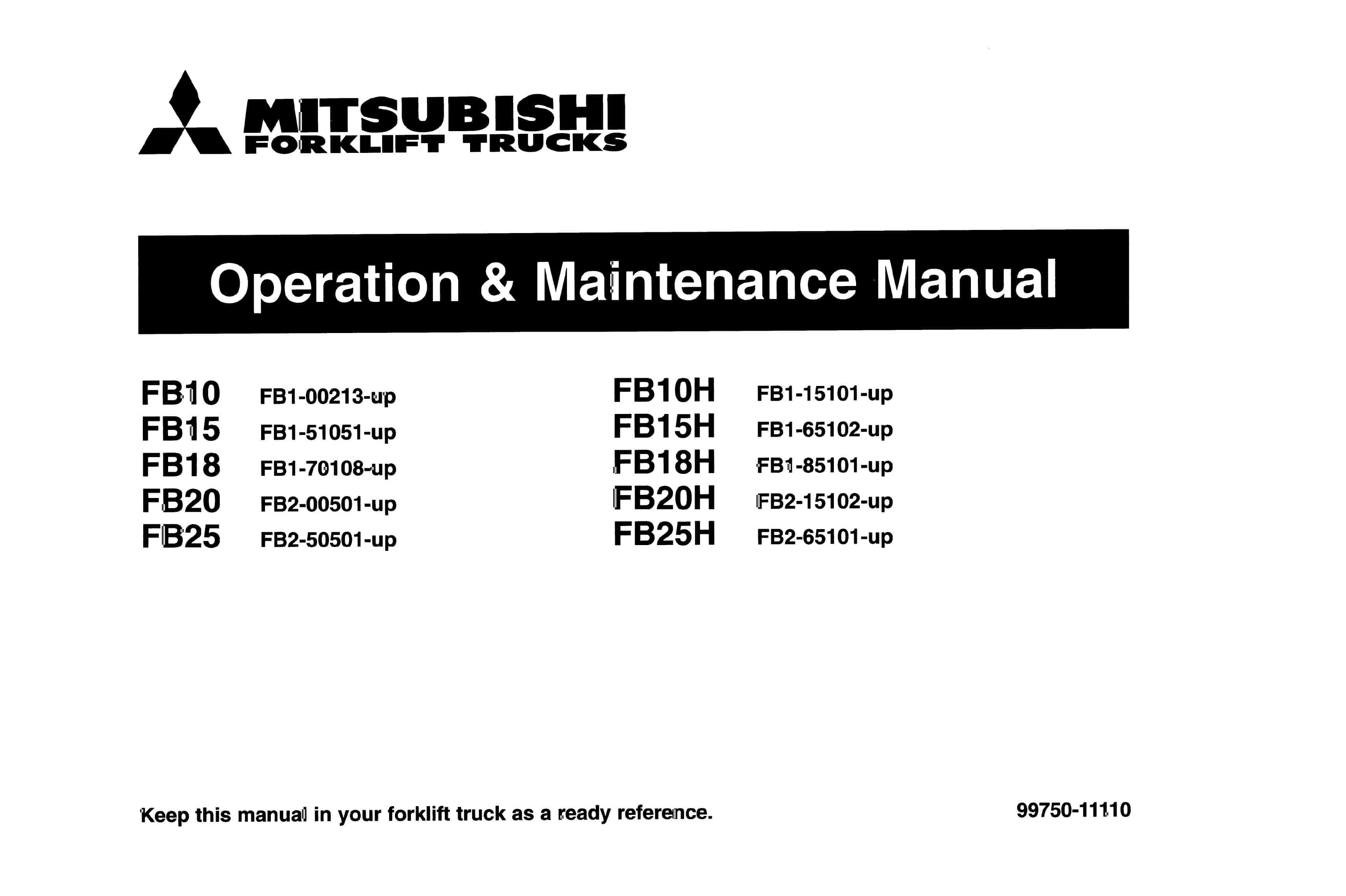
Mitsubishi FB10-25H Operation and Maintenance Manual 99750-11110
$30.00 Add to cart -
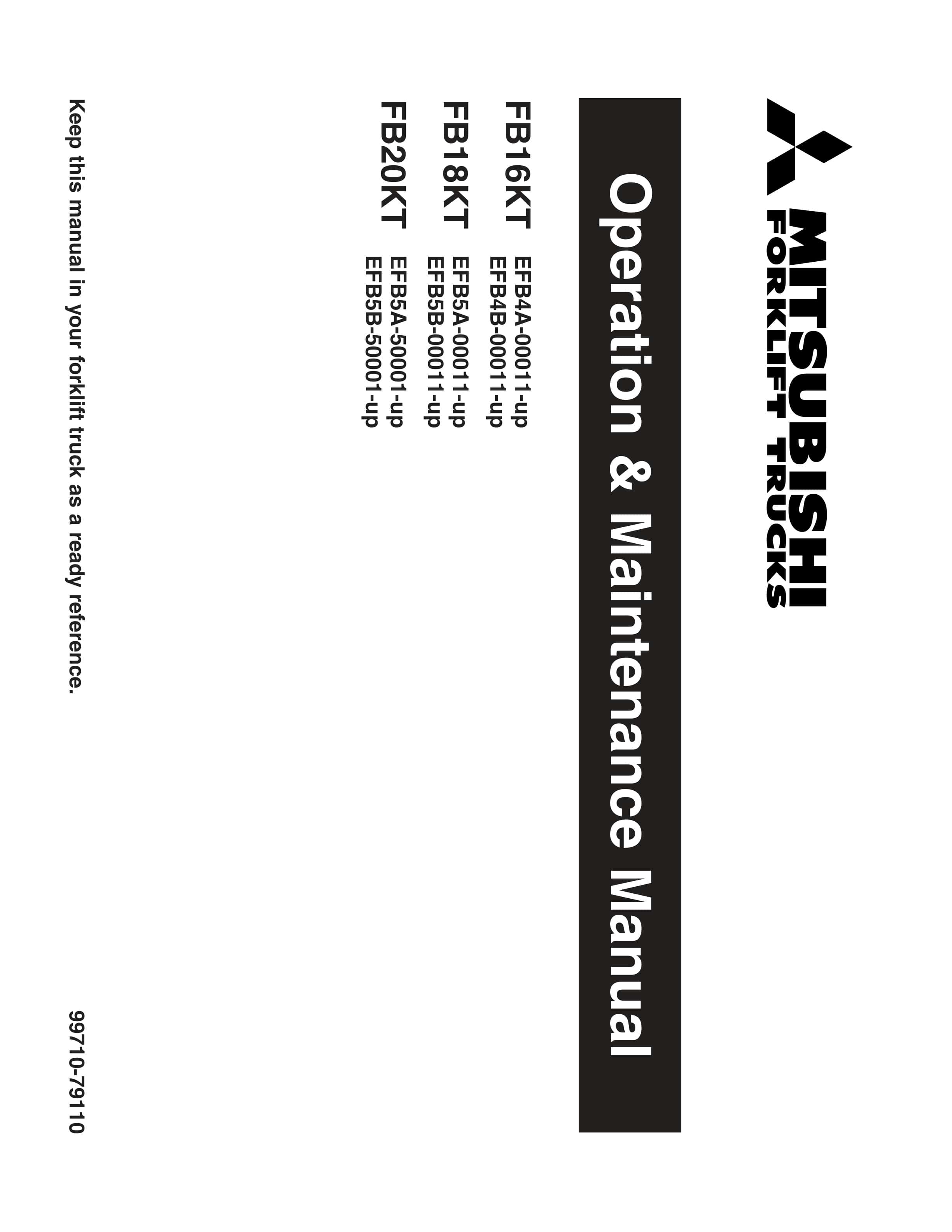
Mitsubishi FB16KT, FB18KT, FB20KT Operation and Maintenance Manual 99710-79110
$30.00 Add to cart -
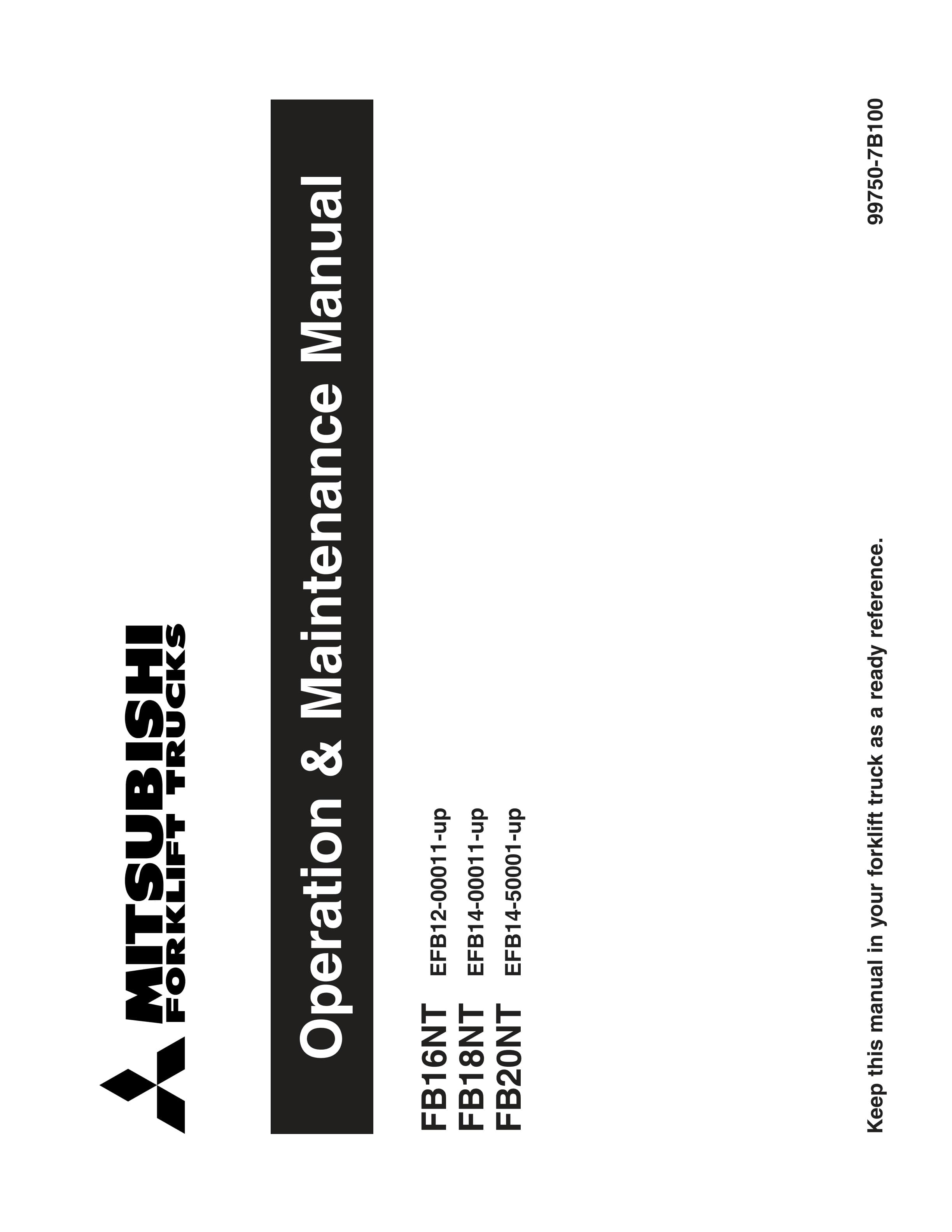
Mitsubishi FB16NT, FB18NT, FB20NT Operation and Maintenance Manual 99750-7B100
$30.00 Add to cart -
Mitsubishi FB16N, FB18N, FB20CN Forklift Trucks Operation and Maintenance Manual 99750-56100
$30.00 Add to cart -
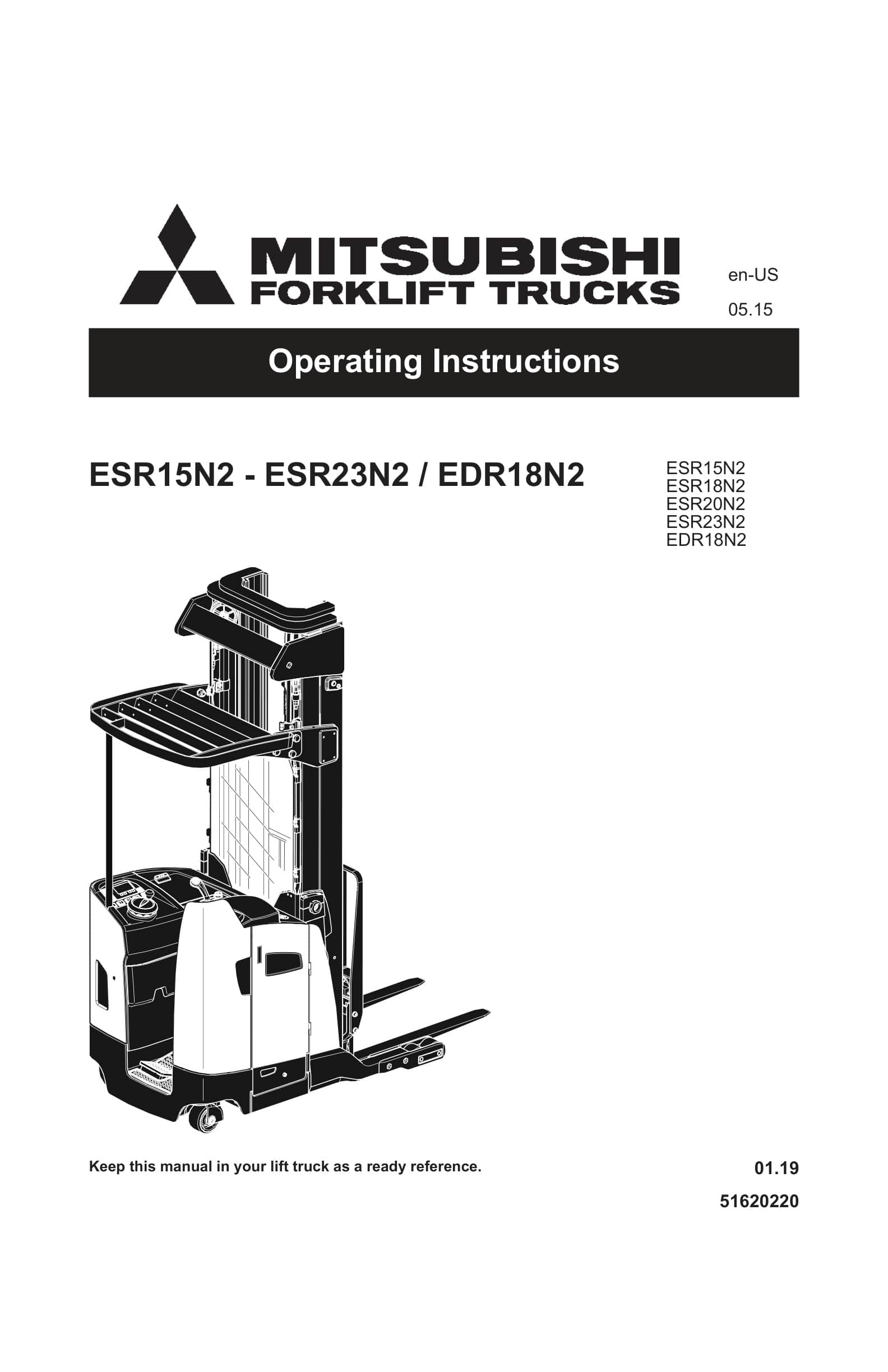
Mitsubishi ESR15N2-ESR23N2, EDR18N2 Operating Instructions 51620220
$30.00 Add to cart


