

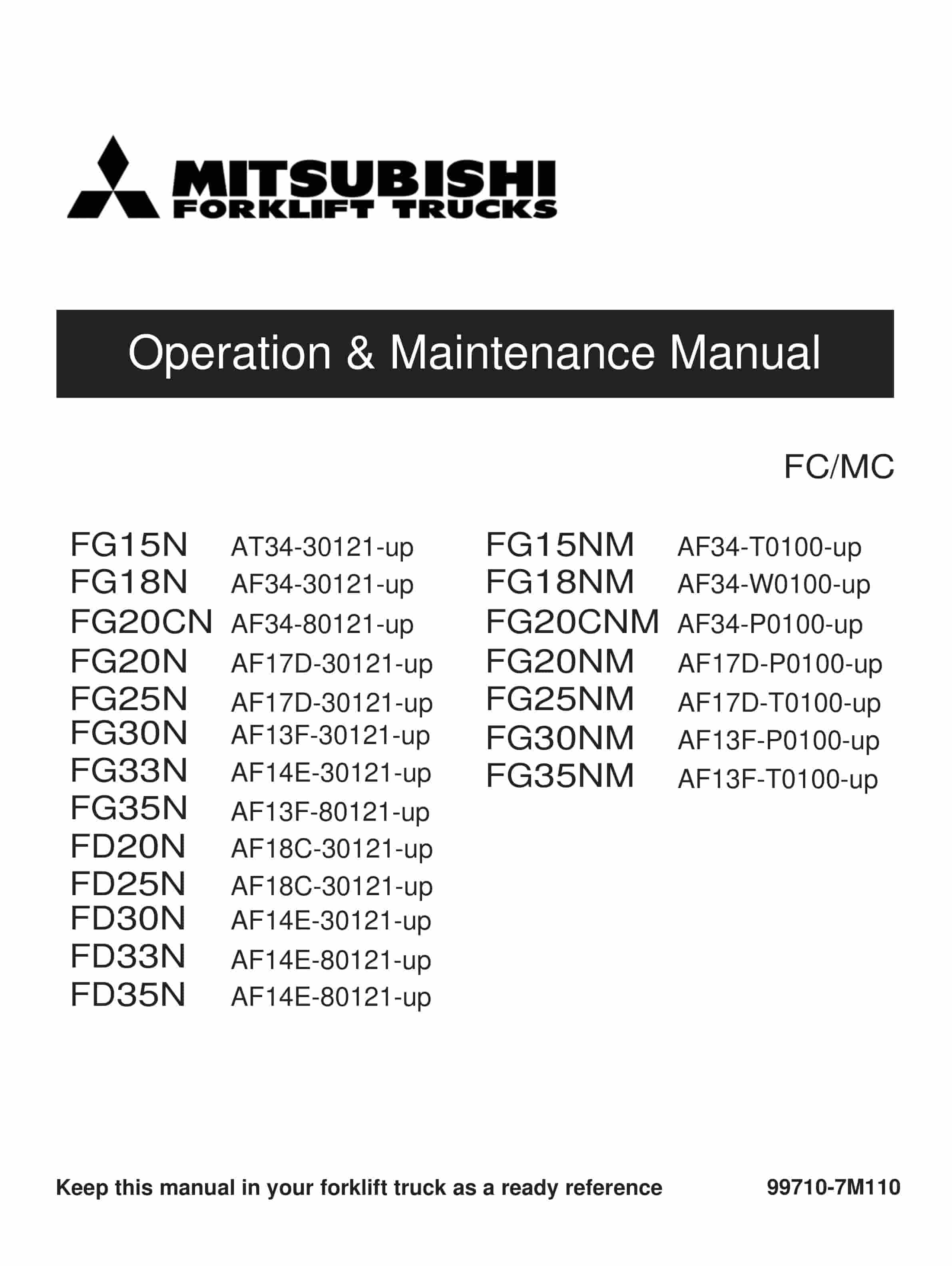
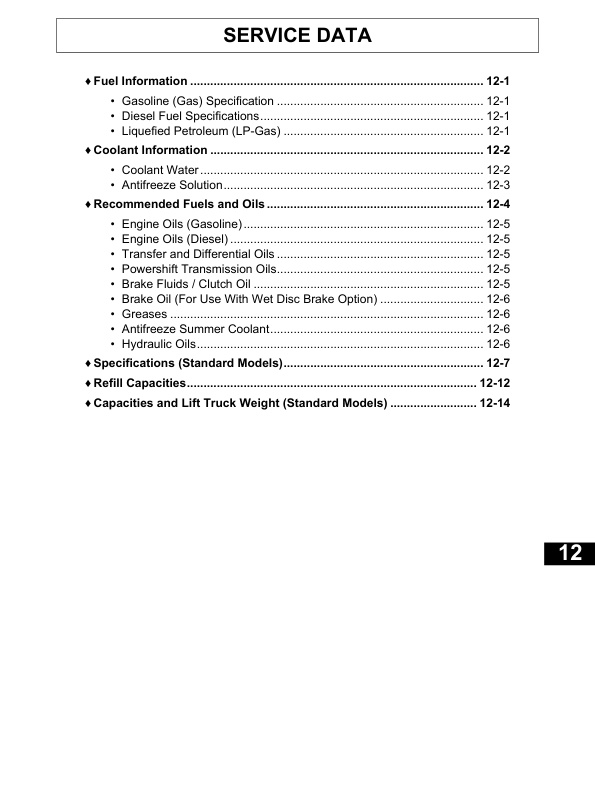
Mitsubishi FG15N-35NM, FD20N-35N Operation and Maintenance Manual 99710-7M110 Vol 2
$30.00
- Type Of Manual: Operation and Maintenance Manual
- Manual ID: 99710-7M110 Vol 2
- Number of Pages: 130
- Size: 10.6MB
- Format: PDF
Product details
-
Model List:
- FG15N, FG15NM, FG18N, FG18NM, FG20CN, FG20CNM, FG20N, FG20NM, FG25N, FG25NM, FG30N, FG30NM, FG33N, FG35N, FG35NM, FD20N, FD25N, FD30N, FD33N, FD35N
- 1. FOREWORD
- 2. HOW TO USE THIS MANUAL
- 2.1. Truck Models Covered in This Manual
- 3. CHAPTER INDEX
- 4. TABLE OF CONTENTS
- 5. SAFETY RULES FOR LIFT TRUCK OPERATORS
- 5.1. General
- 5.2. Warning Decals, Location
- 5.3. Decals for Dual Fuel Only
- 5.4. Warning Decals, Description
- 5.4.1. Parking Brake
- 5.4.2. No Rider
- 5.4.3. Backup Alarm
- 5.4.4. For Safety Observe the Following Warnings
- 5.4.5. Radiator Cap
- 5.4.6. Cooling Fan
- 5.4.7. Overhead Guard
- 5.4.8. No One under / on Forks
- 5.4.9. Load Backrest Extension
- 5.4.10. Crush Points
- 5.4.11. Capacity Plate
- 5.4.12. Inspection / Lubrication Chart
- 5.4.13. Tipover Warnings
- 5.4.14. Maintenance Procedure
- 5.4.15. LPG Fuel Cylinder Replacement
- 5.4.16. Gasoline / LPG Changeover
- 5.5. Safety Rules
- 5.5.1. Authorized and trained operators only
- 5.5.2. Dress properly for the job
- 5.5.3. Always be alert
- 5.5.4. No smoking while refueling
- 5.5.5. Know all signals and traffic rules
- 5.5.6. Unauthorized addition or modification is prohibited
- 5.5.7. Know the lift truck and attachments
- 5.5.8. Avoid being splashed by scalding hot coolant
- 5.5.9. Turn OFF the key switch before servicing
- 5.5.10. Lift truck exhaust fumes contain carbon monoxide and could kill you
- 5.5.11. Inspect the lift truck prior to operation
- 5.5.12. DO NOT operate an unsafe lift truck
- 5.5.13. DO NOT remove the overhead guard
- 5.5.14. DO NOT operate the lift truck under the influence of drugs or alcohol
- 5.5.15. Keep the operators compartment clean
- 5.5.16. LP-Gases are flammable.
- 5.5.17. The back-up alarm must activate when traveling in reverse
- 5.5.18. Operate only in approved areas
- 5.5.19. Sit in the operators seat when starting the engine
- 5.5.20. DO NOT operate a damaged or defective lift truck
- 5.5.21. Face the lift truck when mounting and dismounting
- 5.5.22. Adjust the operators seat before operating the lift truck
- 5.5.23. Always check overhead clearance
- 5.5.24. Use lights in dark, dim areas
- 5.5.25. When operating the lift truck, BE SURE to fasten the seat belt
- 5.5.26. Stay within the confines of the lift truck
- 5.5.27. Always be aware of floor capacity
- 5.5.28. Avoid off-center loading
- 5.5.29. Stay under the overhead guard
- 5.5.30. Check fork locking pins for engagement
- 5.5.31. Be careful of forks that extend beyond the load
- 5.5.32. Check work places for high risk
- 5.5.33. Slow down for wet and slippery surfaces
- 5.5.34. When handling ECM, VCM, DCM and OCM
- 5.6. Operating Precautions
- 5.6.1. DO NOT allow any riders
- 5.6.2. Position levers correctly for starting
- 5.6.3. DO NOT pass another lift truck
- 5.6.4. DO NOT indulge in stunt driving or horseplay
- 5.6.5. Take care when turning with a load
- 5.6.6. Obey all traffic regulations and warning signs, including authorized plant speed limits
- 5.6.7. Always look in the direction of travel
- 5.6.8. Travel in REVERSE if forward visibility is blocked
- 5.6.9. Travel safely on grades with a loaded lift truck
- 5.6.10. Travel safely on grades with an empty lift truck
- 5.6.11. Be particularly careful when driving up or down a steep slope
- 5.6.12. Starting the lift truck on an upgrade carefully
- 5.6.13. Be careful of drive end swing when turning while operating with load end leading
- 5.6.14. DO NOT operate the lift truck under windy conditions
- 5.7. Working Precautions
- 5.7.1. Keep out
- 5.7.2. A helper must NOT be near the lift truck
- 5.7.3. Be careful of changes in capacity
- 5.7.4. Watch out for pedestrians at all times
- 5.7.5. Use the proper attachment
- 5.7.6. DO NOT speed when approaching loads
- 5.7.7. Ensure the load isnt too high
- 5.7.8. DO NOT move when someones next to the lift truck
- 5.7.9. Handle only stable and safely arranged loads
- 5.7.10. Stay clear of pinch points
- 5.7.11. DO NOT allow unloading from raised loads
- 5.7.12. Inspect a trailer before entering
- 5.7.13. DO NOT use damaged pallets
- 5.7.14. DO NOT abuse forks
- 5.7.15. DO NOT use lift truck improperly
- 5.7.16. Operate the direction lever smoothly
- 5.7.17. Always stay within the capacity
- 5.7.18. Park in authorized areas only
- 5.7.19. Watch out for personnel
- 5.7.20. DO NOT lift personnel except on a securely attached, specially designed work platform
- 5.7.21. Park disabled lift truck safely
- 5.8. LP-Gas
- 6. KNOW YOUR LIFT TRUCK
- 6.1. Serial Number and Capacity Plate
- 6.2. Electrical Components
- 6.3. Model View
- 6.3.1. MC Model
- 6.3.2. FC Model
- 6.4. Driving Switches and Controls
- 6.4.1. Key Switch
- 6.4.2. Direction Lever (Powershift)
- 6.4.3. Inching Pedal (Powershift)
- 6.4.4. Turn Signal / Light Switch
- 6.4.5. Steering Tilt Lever
- 6.5. Instrument Panel
- 6.5.1. LCD Screen
- 6.5.2. Warning Lamps and Indicators
- 6.5.3. Basic Screen Display
- 6.5.4. Basic Operation
- 6.5.5. When an Error Occurs
- 6.5.6. Optional Functions
- 6.5.7. Optional Functions for Use With Wet Disc Brake
- 6.6. Integrated Presence System
- 6.6.1. Mast Interlock System (MC Model)
- 6.6.2. Mast Interlock System (FC Model)
- 6.6.3. Mast Interlock System Functions
- 6.6.4. Driving Interlock System
- 6.6.5. Driving Interlock System Functions
- 6.6.6. Neutral System
- 6.6.7. Neutral System Functions
- 6.6.8. Seat Belt Warning Lamp
- 6.6.9. Seat Belt Warning Functions
- 6.6.10. Parking Brake Warning Buzzer and Lamp
- 6.6.11. Parking Brake Warning Functions
- 6.7. Parking Brake Dragging Warning
- 6.8. Operating Switches and Controls (MC Model)
- 6.8.1. Lift Lever
- 6.8.2. Tilt Lever
- 6.8.3. Attachment Lever
- 6.9. Operating Switches and Controls (FC Model)
- 6.9.1. Lift Lever
- 6.9.2. Tilt Lever
- 6.9.3. Attachment Lever A/B (Optional)
- 6.9.4. Selector Switch Between Forth and Fifth Attachment
- 6.9.5. Other Controls (Standard)
- 6.9.6. Emergency Stop Button
- 6.9.7. Forward and Back Adjustment Stopper Knob
- 6.9.8. Up and Down Adjustment Stopper Knob
- 6.9.9. Other Controls (Optional)
- 6.9.10. Lowering Speed Selector Switch (Optional)
- 6.9.11. Mast Vertical Switch (Optional)
- 6.9.12. Direction Switch (Optional)
- 6.10. Operators Seat
- 6.10.1. Seat Adjustment
- 6.10.2. Forward and Back Adjustment
- 6.10.3. Adjustment of Suspension (FC Model)
- 6.10.4. Lumbar Support Adjustment (FC Model)
- 6.10.5. Pocket for the Manual
- 6.10.6. Operator Presence Switch and Buzzer
- 6.10.7. How to Tip the Seat Forward
- 6.11. Seat Belt
- 6.12. Fork Locking Pins
- 6.13. Changing Forks
- 6.14. Drawbar Pin
- 6.15. Assist Grip
- 6.16. Engine Hood
- 6.16.1. Hood Latch
- 6.17. Hydraulic Tank Oil Level / Filler Hole
- 6.18. Fuel Filler
- 6.19. Brake Tank Oil Level / Air Breather
- 7. HOW TO AVOID A TIPOVER HOW TO SURVIVE ONE
- 7.1. Know What Lift Truck Stability Is
- 7.2. Center of Gravity (CG)
- 7.3. Stability and Center of Gravity (Top View)
- 7.4. Stability and Center of Gravity (Side View)
- 7.5. Lift Truck Stability Base
- 7.6. Capacity (Weight and Load Center)
- 7.7. Capacity Plate
- 7.7.1. For Example
- 7.8. Dos and Donts to Avoid Tipover
- 7.8.1. Fasten the seat belt
- 7.8.2. DO NOT jump off your lift truck if it starts to tip over
- 7.8.3. DO watch Tail swing
- 7.8.4. DO check surface strengths
- 7.8.5. DO avoid fast starts, turns and sudden stops
- 7.8.6. DO NOT elevate forward tilted loads
- 7.8.7. Travel at a reduced speed on rough surfaces
- 7.8.8. DO avoid slippery surfaces
- 7.8.9. Only stable or safely arranged loads must be handled
- 7.8.10. DO NOT travel with forks higher than 15 to 20 cm (6 to 8 in.) above the ground
- 7.8.11. DO NOT make fast or sharp turns with a loaded or unloaded lift truck
- 7.8.12. DO NOT turn sharply, even with an empty raised mast, to avoid a tipover
- 7.8.13. DO wear a hard hat
- 7.8.14. Be aware of the stability of an empty lift truck
- 7.9. How to Survive in a Tipover
- 8. REFUELING
- 8.1. Gasoline and Diesel Engine Equipped
- 8.2. LP-Gas Engine Equipped
- 8.2.1. For Standard LP-Gas Tank
- 9. OPERATION
- 9.1. New Lift Truck Break-in
- 9.2. Before Starting Engine
- 9.2.1. FC model
- 9.2.2. MC model
- 9.2.3. Gasoline / LP-Gas Dual Fuel Type
- 9.2.4. FC Model
- 9.2.5. Seat Adjustment
- 9.3. Starting Gasoline Engine
- 9.3.1. If the engine wont start
- 9.4. Starting LP-Gas Engine
- 9.5. Starting Diesel Engine
- 9.5.1. If the engine wont start
- 9.6. Engine Wont Start
- 9.6.1. When Engine Is Flooded
- 9.6.2. When Engine Is Started After Long Recess
- 9.7. After Starting Engine
- 9.8. Before Moving Lift Truck
- 9.9. Lift Truck Operation
- 9.9.1. Changing Speed
- 9.9.2. Changing Direction
- 9.9.3. Operating Techniques
- 9.9.4. Steering (Turning)
- 9.9.5. Inching
- 9.10. Stopping Lift Truck
- 9.11. Parking Lift Truck (After Stopping)
- 9.12. Leaving Lift Truck (FC Model)
- 9.12.1. For Use With Wet Disc Brake Option
- 10. OPERATING TECHNIQUES
- 10.1. Stacking Methods
- 10.1.1. Stacking Different Loads in Size
- 10.1.2. Stacking Small Identical Loads
- 10.1.3. Stacking Large Identical Loads
- 10.2. Handling Loads Safely
- 10.2.1. Handle ONLY stable loads to prevent the load from falling
- 10.3. Correct Operating Steps
- 10.4. Incorrect Operating Steps
- 10.4.1. Example 1
- 10.5. Inching Into and Lifting the Load
- 10.6. Traveling With the Load
- 10.7. Unloading
- 10.8. Working on Grades
- 10.8.1. Normal Travel position
- 10.8.2. Traveling on a Grade
- 10.8.3. Stopping on a Grade
- 10.8.4. Starting on a Grade (Engine Stalls on a Grade)
- 11. STORING THE LIFT TRUCK
- 11.1. End of Each Shift Storage
- 11.2. Long Term Storage
- 11.2.1. Fuel System
- 11.2.2. Hydraulic System
- 11.2.3. Engine Cooling System
- 11.2.4. Engine Cylinders
- 11.2.5. Battery
- 11.2.6. Controller
- 11.2.7. Other
- 12. TRANSPORTATION HINTS
- 12.1. Lift Truck Loading and Shipping
- 12.2. Lift Truck Lifting and Tiedown Information
- 13. SPECIAL SITUATIONS
- 13.1. Care in Cold Weather
- 13.1.1. Fuel Oils and Lubrication Oils
- 13.1.2. Battery
- 13.1.3. Engine Coolant
- 13.2. Care in Hot Weather
- 13.2.1. Fuel Oils and Lubrication Oils
- 13.2.2. Battery
- 13.2.3. Engine Coolant
- 13.3. Severe Dust or Lint Conditions
- 14. TROUBLESHOOTING
- 14.1. Stalled Engine
- 14.2. Starting With Jumper Cables
- 14.3. If Lamps Wont Glow
- 14.3.1. How to Check Fuses and Lamps
- 14.4. If the Water Temperature Gauge Shows Red Zone
- 14.5. If Torque Converter Oil Temperature Warning Lamp Glows (Powershift)
- 14.6. Trouble With the LP-Gas Equipment
- 14.7. If the Lift Truck Wont Change Direction
- 14.8. If the Lift Truck Wont Move
- 14.9. If the Mast and Attachments Stop Moving
- 14.10. If the Mast and Attachments Malfunction (FC Model)
- 14.11. If a Tire Blew Out
- 14.11.1. If a Tire Blew Out During Traveling or Operation
- 14.12. Changing Tires
- 14.12.1. Before Changing a Tire
- 14.12.2. To Remove Wheel
- 14.12.3. To Raise Front Wheel
- 14.12.4. To Raise Rear Wheel
- 14.12.5. To Install Wheel
- 14.12.6. To Add Air to Tires
- 14.12.7. Dual Tire (Optional)
- 14.13. Error Codes and Explanations
- 15. MAINTENANCE
- 15.1. General
- 15.2. Inspection Precautions
- 15.3. Maintenance Schedule
- 15.3.1. Every 10 Service Hours or Daily (Pre-Start), Whichever Comes First
- 15.3.2. Every 50 Service Hours or Weekly, Whichever Comes First
- 15.3.3. One Month (30 days) or 200 Service Hours After Delivery of a New Truck, Whichever Comes First
- 15.3.4. Every 200 Service Hours or Monthly, Whichever Comes First
- 15.3.5. Every 500 Service Hours or 3 Months, Whichever Comes First
- 15.3.6. Every 1000 Service Hours or 6 Months, Whichever Comes First
- 15.3.7. Every 2000 Service Hours or 1 year, Whichever Comes First
- 15.4. Every 10 Service Hours or Daily (Pre-Start), Whichever Comes First
- 15.4.1. Faulty Operation Found the Day Before
- 15.4.2. Oil, Fuel or Coolant Leaks
- 15.4.3. Head Lamp and Working Lamp (if equipped)
- 15.4.4. Load Backrest Extension
- 15.4.5. Tilt Cylinder Socket Bolts
- 15.4.6. Overhead Guard
- 15.4.7. Assist Grip
- 15.4.8. Accelerator Pedal
- 15.4.9. Brake Pedal
- 15.4.10. Inching Pedal
- 15.4.11. Parking Brake Lever
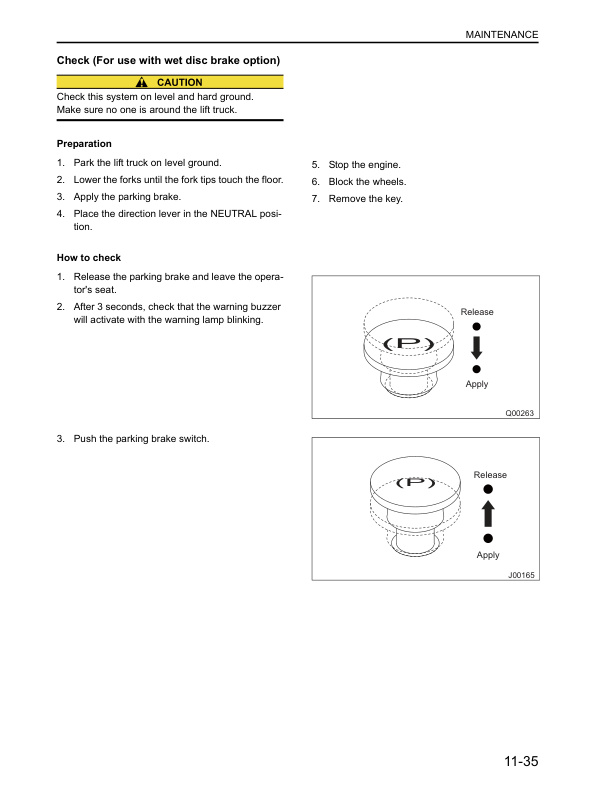
- 15.4.12. Parking Brake System
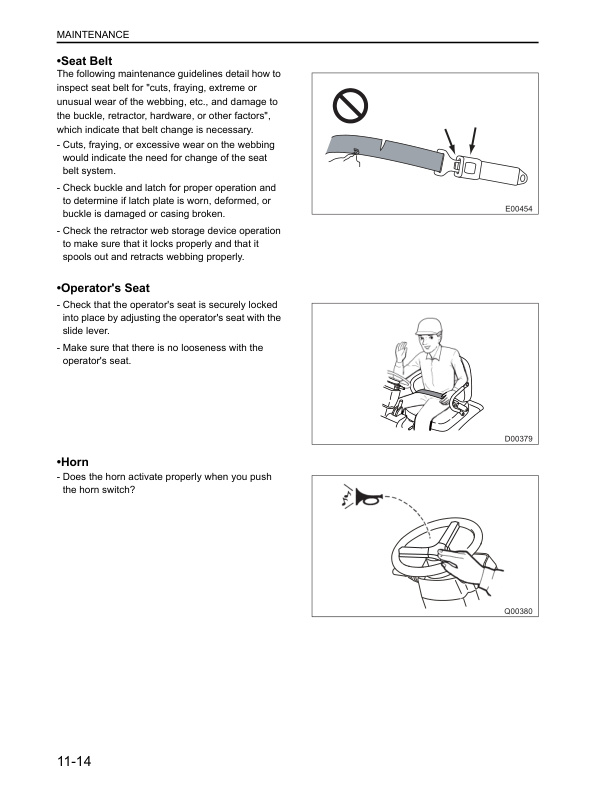
- 15.4.13. Seat Belt
- 15.4.14. Operators Seat
- 15.4.15. Steering Wheel and Column
- 15.4.16. Stop Lamps
- 15.4.17. Lamps of Instrument Panel
- 15.4.18. Lift Chains
- 15.4.19. Engine (Exhaust, Noise and Vibration)
- 15.4.20. Mast Strip Sliding Surfaces
- 15.4.21. Back-up Lamps (If Equipped)
- 15.4.22. Engine Oil
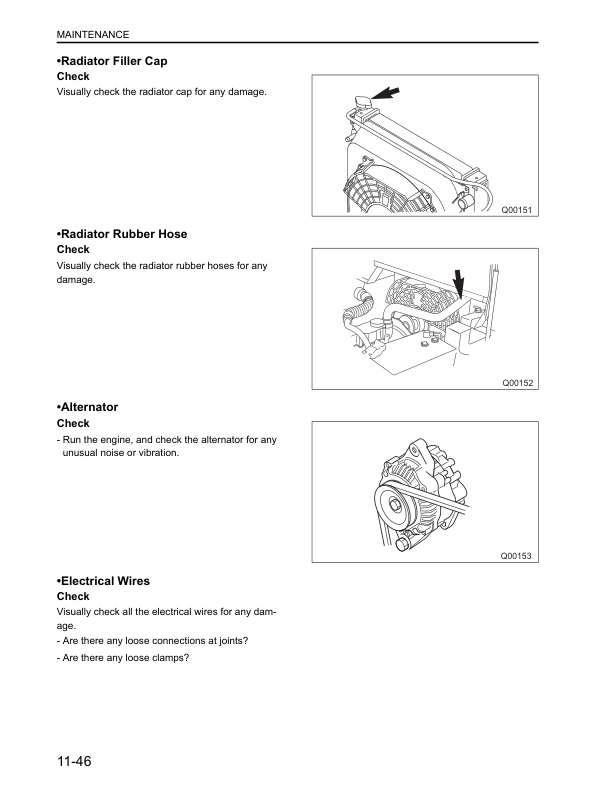
- 15.4.23. Engine Coolant
- 15.4.24. Hydraulic Oil
- 15.4.25. Powershift Transmission
- 15.4.26. Service Brakes
- 15.4.27. Brake Oil
- 15.4.28. Wheel Nuts
- 15.4.29. Tires and Rims
- 15.4.30. Mast and Forks
Related products
-
Mitsubishi FB10K RT, FB12K RT, FB15K RT Forklift Trucks Operation and Maintenance Manual 99750-54110
$30.00 Add to cart -
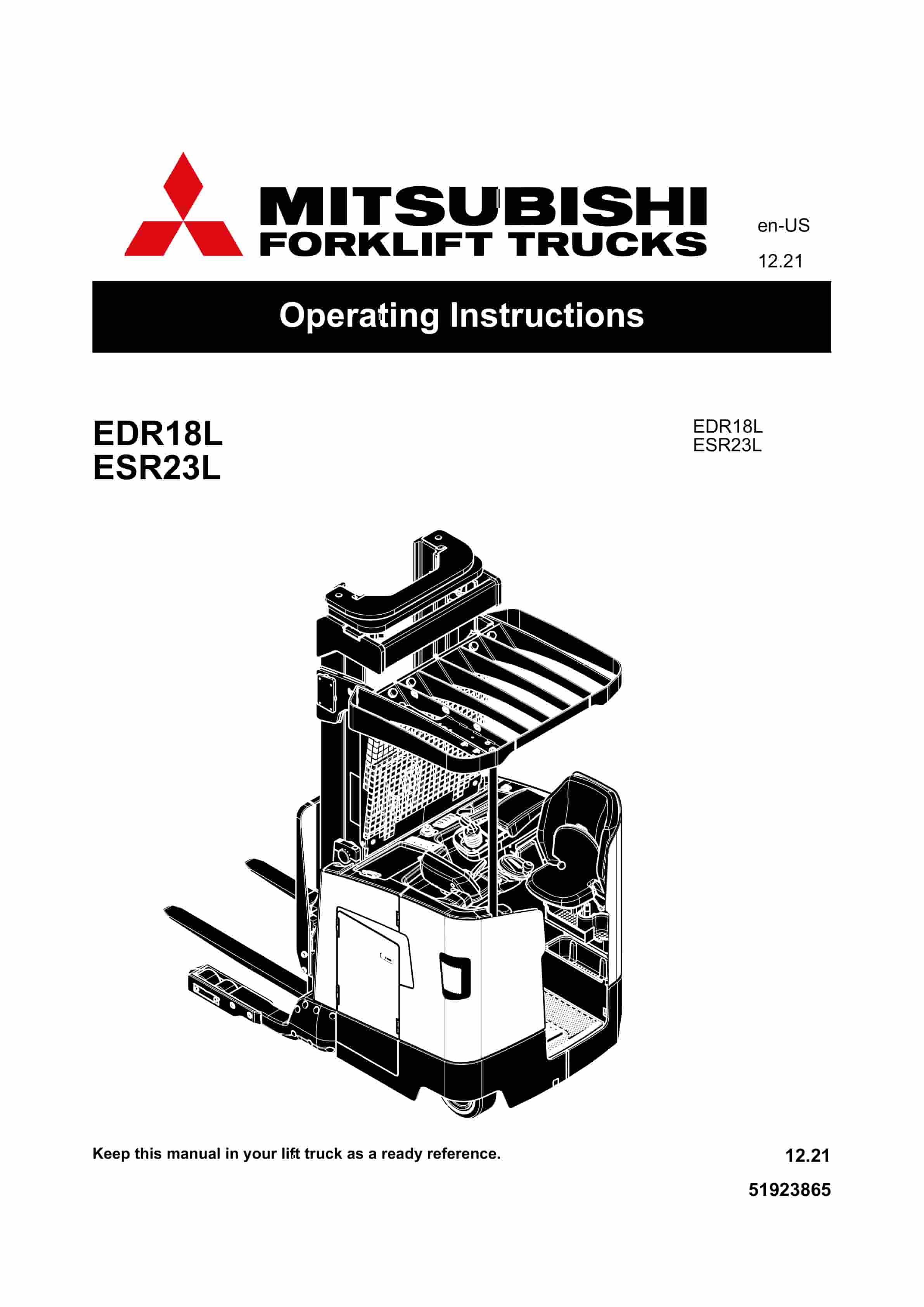
Mitsubishi EDR18L, ESR23L Operating Instructions 51923865
$30.00 Add to cart -
Mitsubishi FB10-28(H)CA1, FB30CA1 Operation and Maintenance Manual 99710-17110
$30.00 Add to cart -
Mitsubishi FB16NT, FB18NT, FB20NT Operation and Maintenance Manual 99750-7B100
$30.00 Add to cart -
Mitsubishi FB14-20A(C)NT, FB16-20A(C)N Operation and Maintenance Manual 654390 EN A
$30.00 Add to cart


CA1,%20FB30CA1%20Operation%20and%20Maintenance%20Manual%2099710-17110&url=https://ownersmanualpdf.net/docs/mitsubishi-fb10-28hca1-fb30ca1-operation-and-maintenance-manual-99710-17110/&media=https://ownersmanualpdf.net/wp-content/uploads/2025/10/mitsubishi-fb10-28hca1-fb30ca1-operation-and-maintenance-manual-99710-17110-1.jpg)

NT,%20FB16-20A(C)N%20Operation%20and%20Maintenance%20Manual%20654390%20EN%20A&url=https://ownersmanualpdf.net/docs/mitsubishi-fb14-20acnt-fb16-20acn-operation-and-maintenance-manual-654390-en-a/&media=https://ownersmanualpdf.net/wp-content/uploads/2025/10/mitsubishi-fb14-20acnt-fb16-20acn-operation-and-maintenance-manual-654390-en-a-1.jpg)