

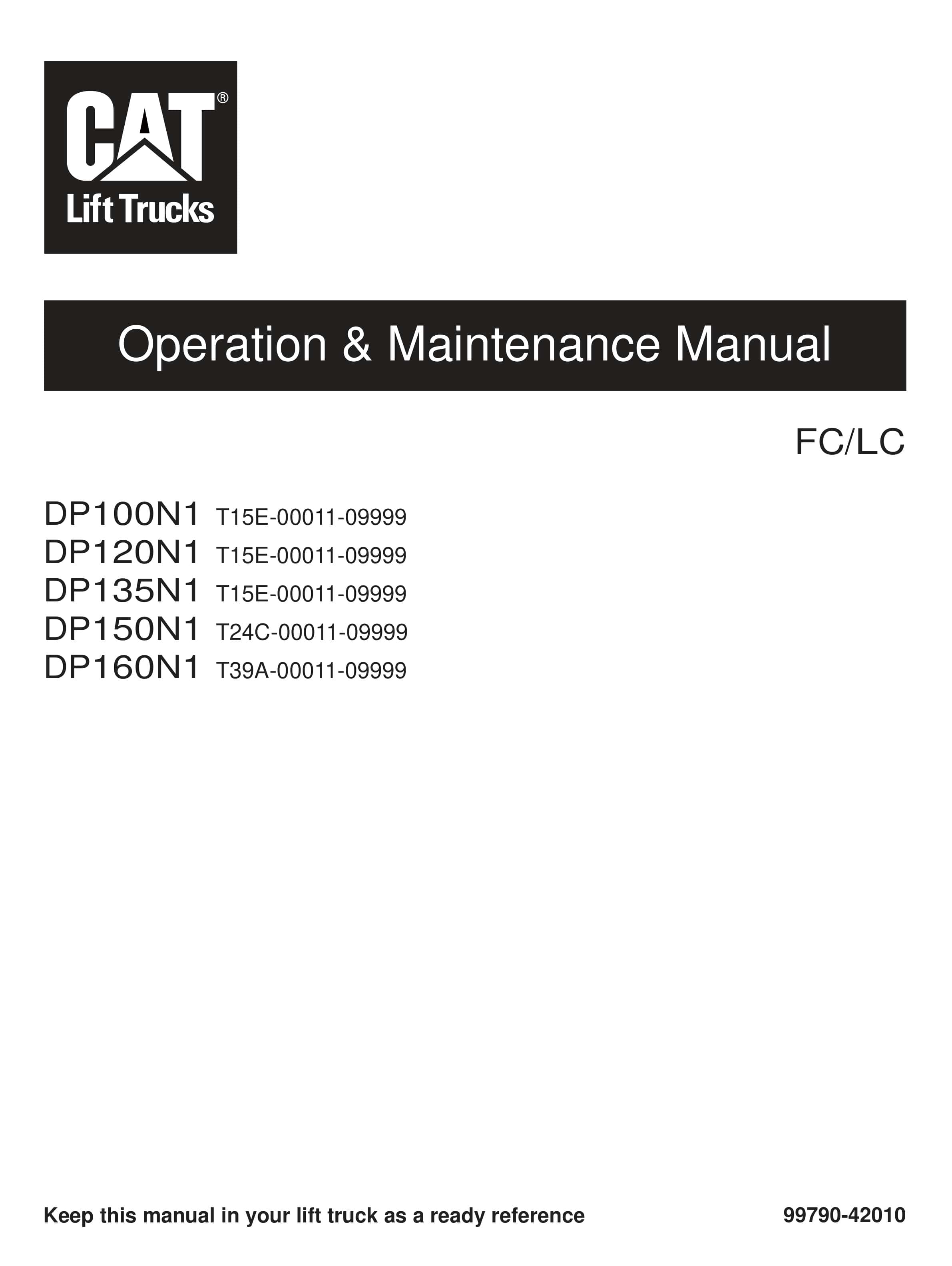
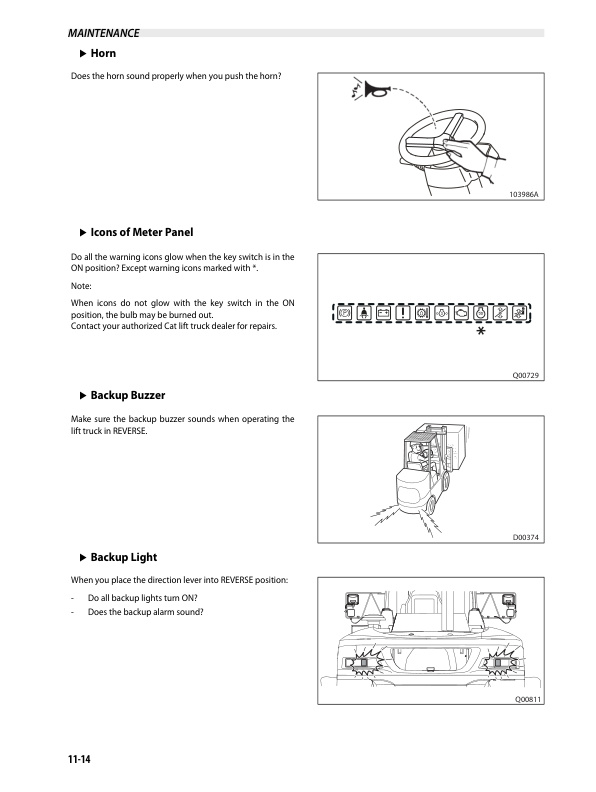
Caterpillar DP100N1, DP120N1, DP135N1, DP150N1, DP160N1 Operation and Maintenance Manual 99790-42010
$30.00
- Type Of Manual: Operation and Maintenance Manual
- Manual ID: 99790-42010
- Number of Pages: 222
- Size: 24.3MB
- Format: PDF
Product details
-
Model List:
- DP100N1, DP120N1, DP135N1, DP150N1, DP160N1
- 1. FOREWORD
- 1.1. How to Use This Manual
- 1.2. LOCKOUT/TAGOUT
- 2. SAFETY RULES FOR LIFT TRUCK OPERATORS
- 2.1. General
- 2.2. Warning Decals, Location
- 2.3. Description of Danger, Warning, and Caution Decals
- 2.3.1. Fasten Seat Belt Decal
- 2.3.2. Survive in a Tipover Decal
- 2.3.3. Operation Warning Decal
- 2.3.4. Overhead Guard Decal
- 2.3.5. No Access With Engine Running Decal
- 2.3.6. Parking Brake Decal
- 2.3.7. No Riders Warning Decal
- 2.3.8. Pinch Points Decal
- 2.3.9. No One on the Fender
- 2.3.10. No One Under / On Forks and No One Between Mast and Chassis Decal
- 2.3.11. Brake Warning Buzzer Decal
- 2.3.12. Capacity Plate
- 2.3.13. Backup Alarm Decal
- 2.3.14. Operator Restraint System Decal
- 2.3.15. No Contamination Permissible Decal
- 2.3.16. Precautions for Handling ECU Decal
- 2.4. Safety Rules
- 2.5. Operating Precautions
- 2.6. Working Precautions
- 3. KNOW YOUR LIFT TRUCK
- 3.1. Serial Number and Capacity Plate
- 3.2. Electrical Components
- 3.3. Model View
- 3.3.1. FC Model (Type A)
- 3.3.2. FC Model (Type B)
- 3.3.3. LC Model
- 3.4. Driving Switches and Controls
- 3.4.1. Key Switch
- 3.4.2. Direction Lever (Powershift Model)
- 3.4.3. Inching Pedal
- 3.4.4. Turn Signal / Light Switch
- 3.4.5. Steering Column Tilt Lever
- 3.5. Meter Panel
- 3.5.1. Warning Icons Glow Check
- 3.5.2. LCD Screen
- 3.5.3. Warning Icons and Indicators
- 3.5.4. Basic Screen Display
- 3.5.5. Basic Operation
- 3.5.6. When Diagnostic Code Is Shown on Display
- 3.5.7. When Several Warnings Occur Simultaneously
- 3.5.8. Warning Symbols
- 3.5.9. Warning Icons
- 3.5.10. Optional Features
- 3.6. Side Panel
- 3.6.1. Speed Mode Selector Switch
- 3.6.2. Brake Warning Icon
- 3.7. Presence Detection System
- 3.7.1. Mast Interlock System
- 3.7.2. Mast Interlock System Functions
- 3.7.3. Driving Interlock System
- 3.7.4. Driving Interlock System With Operator Restraint Function (For Powershift Models With Australia Specification Only)
- 3.7.5. Driving Interlock System Functions (For Powershift Models Only)
- 3.7.6. Driving Interlock System Functions (For Powershift Models With Australia Specification Only)
- 3.7.7. Neutral System
- 3.7.8. Neutral System Functions
- 3.7.9. Seat Belt Warning Icon
- 3.7.10. Seat Belt Warning Functions
- 3.7.11. Parking Brake Warning Alarm and Warning Icon
- 3.7.12. Parking Brake Warning Functions
- 3.8. Operating Switches and Controls
- 3.8.1. FC Control Box (Type-A)
- 3.8.2. FC Control Box (Type-B)
- 3.8.3. Lift Switch
- 3.8.4. Tilt Switch
- 3.8.5. Lowering Speed Selector Switch (Optional)
- 3.8.6. Direction Switch (Optional)
- 3.8.7. Attachment Switch A/B (Optional)
- 3.8.8. Selector Switch Between Fourth and Fifth Attachment (Optional)
- 3.8.9. Other Controls (Standard)
- 3.8.10. Emergency Mast Stop Button
- 3.8.11. Forward and Backward Adjustment Stopper Knob (FC Control Box Type-A)
- 3.8.12. Up and Down Adjustment Stopper Knob (FC Control Box Type-A)
- 3.8.13. Forward and Backward Adjustment (FC Control Box Type-B)
- 3.8.14. Up and Down Adjustment (FC Control Box Type-B)
- 3.8.15. LC Control Box
- 3.8.16. Lift Lever
- 3.8.17. Tilt Lever
- 3.8.18. Attachment Lever A/B (Option)
- 3.9. Operator Seat
- 3.9.1. Seat Adjustment
- 3.9.2. Forward and Back Adjustment
- 3.9.3. Reclining Angle Adjustment
- 3.9.4. Adjustment of Suspension
- 3.9.5. Pocket for the Operation Maintenance Manual
- 3.9.6. Operator Presence Switch and Buzzer
- 3.10. Seat Belt
- 3.11. Fork Locking Pins
- 3.12. Drawbar Pin
- 3.13. Assist Grips and Foot Step
- 3.14. Engine Hood
- 3.14.1. Hood Latch
- 3.15. Hydraulic Tank Oil Filler Hole
- 3.16. Fuel Filler
- 3.17. Air Tank
- 4. HOW TO AVOID A TIPOVER / HOW TO SURVIVE ONE
- 4.1. Know What Lift Truck Stability Is
- 4.2. Center of Gravity (CG)
- 4.3. Stability and Center of Gravity (Top View)
- 4.4. Lift Truck Stability Base
- 4.5. Capacity (Weight and Load Center)
- 4.6. Capacity Plate
- 4.7. Dos and Donts to Avoid Tipover
- 4.8. How to Survive in a Tipover
- 5. REFUELING
- 5.1. Diesel Engine Equipped
- 6. OPERATION
- 6.1. New Lift Truck Break-in
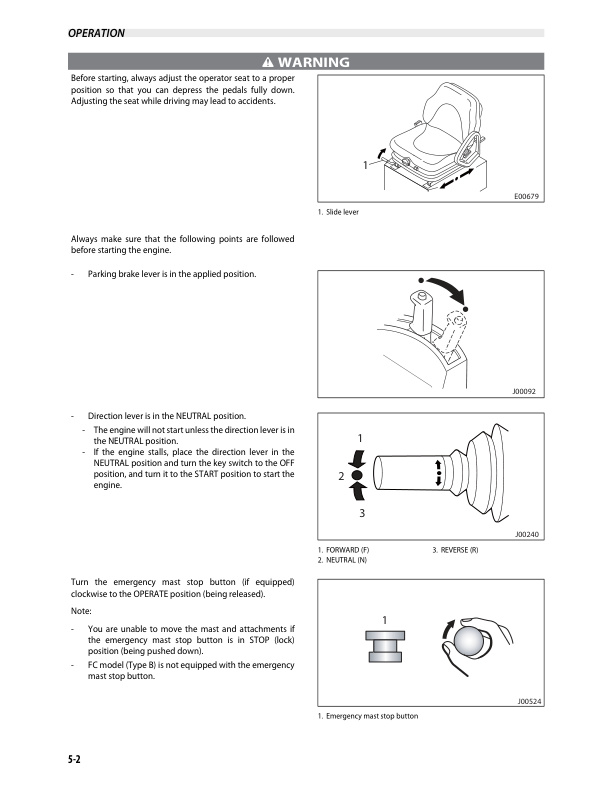
- 6.2. Before Starting Engine
- 6.3. Starting Engine
- 6.4. Engine Wont Start
- 6.5. After Starting Engine
- 6.6. Before Moving Lift Truck
- 6.7. Lift Truck Operation
- 6.7.1. Changing Speed
- 6.7.2. Changing Direction
- 6.7.3. Operating Techniques
- 6.7.4. Steering (Turning)
- 6.7.5. Inching
- 6.8. Stopping Lift Truck
- 6.9. Parking Lift Truck (After Stopping)
- 7. OPERATING TECHNIQUES
- 7.1. Stacking Methods
- 7.1.1. Stacking Different Size Loads
- 7.1.2. Stacking Small Identical Loads
- 7.1.3. Stacking Large Identical Loads
- 7.2. Handling Loads Safely
- 7.2.1. Adjusting Fork Spread
- 7.3. Before Operating the Lift Truck
- 7.4. Blinking of the Mast Interlock Indicator Icon
- 7.5. Lifting the Load
- 7.6. Traveling With the Load
- 7.7. Unloading
- 7.8. Working on Grades
- 7.8.1. Normal Travel Position
- 7.8.2. Traveling on a Grade
- 7.8.3. Stopping on a Grade
- 7.9. Starting on a Grade (Engine Stalls on a Grade)
- 8. STORING THE LIFT TRUCK
- 8.1. End of Each Shift Storage
- 8.2. Long Term Storage
- 8.2.1. Storage Within Three Months
- 8.2.2. Storage Exceeding Three Months
- 9. TRANSPORTATION HINTS
- 9.1. Lift Truck Loading and Shipping
- 9.2. Lift Truck Lifting and Tie Down Information
- 10. SPECIAL SITUATIONS
- 10.1. Care in Cold Weather
- 10.1.1. Fuel Oils and Lubrication Oils
- 10.1.2. Battery
- 10.1.3. Engine Coolant
- 10.2. Care in Hot Weather
- 10.2.1. Fuel Oils and Lubrication Oils
- 10.2.2. Battery
- 10.2.3. Engine Coolant
- 10.3. Severe Dust or Lint Conditions
- 10.3.1. Air Cleaner Element
- 10.3.2. Engine Oil and Engine Oil Filter
- 10.3.3. Hydraulic Oil
- 10.3.4. Hydraulic Tank Return Filter
- 11. TROUBLESHOOTING
- 11.1. Stalled Engine
- 11.2. If a Tire Blows Out
- 11.2.1. If a Tire Blows out During Travel or Operation
- 11.3. Replacing Tires
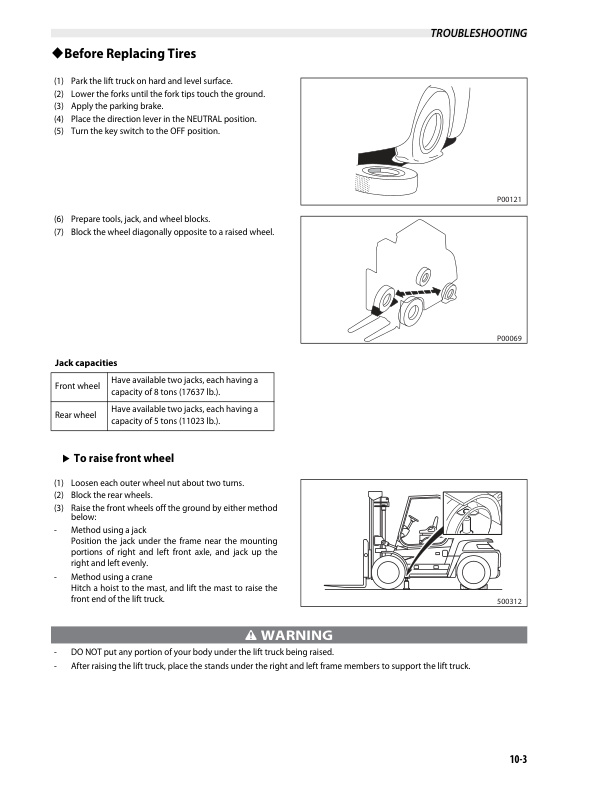
- 11.4. Before Replacing Tires
- 11.4.1. To raise front wheel
- 11.4.2. To Remove Front Wheel
- 11.4.3. To Install Front Wheel
- 11.4.4. To Remove Rear Wheel
- 11.4.5. To Install Rear Wheel
- 11.4.6. To Add Air to Tires
- 11.5. Starting With Jumper Cables
- 11.6. If Lights Wont Glow
- 11.6.1. How to Check Fuses and Lights
- 11.7. If the Engine Coolant Temperature Gauge Shows RED Zone
- 11.8. If Torque Converter Oil Temperature Warning Icon Glows (Powershift Model)
- 11.9. If the Lift Truck Wont Change Direction
- 11.10. If the Lift Truck Wont Change Directions (For Powershift Models With Australia Specification Only)
- 11.11. If the Mast Stops Moving
- 11.12. If the Mast and Attachments Malfunction
- 11.13. Diagnostic Codes and Explanations
- 12. MAINTENANCE
- 12.1. General
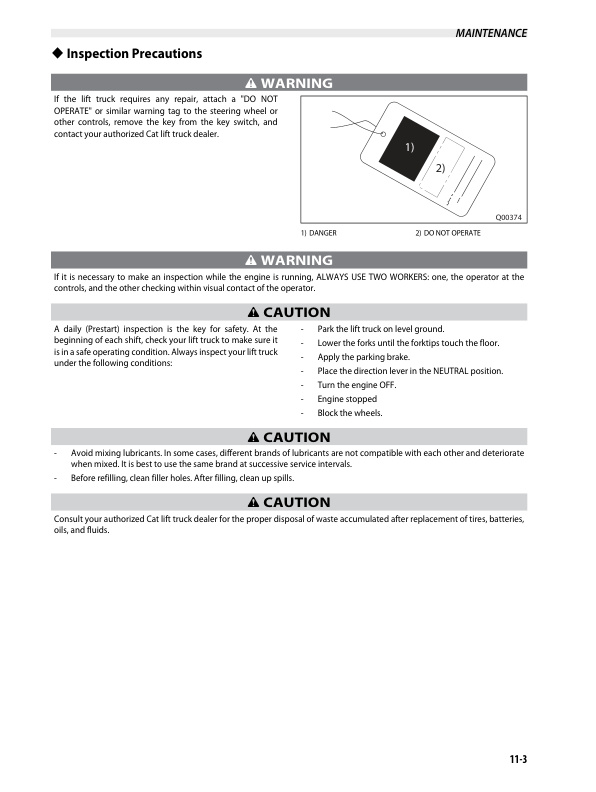
- 12.2. Inspection Precautions
- 12.3. Maintenance Schedule
- 12.3.1. Every 10 Service Hours or Daily (Prestart), Whichever Comes First
- 12.3.2. Every 50 Service Hours or Weekly, Whichever Comes First
- 12.3.3. One Month (30 days) or 200 Service Hours After Delivery of a New Lift Truck, Whichever Comes First
- 12.3.4. Every 500 Service Hours or 3 Months, Whichever Comes First
- 12.3.5. Every 1000 Service Hours or 6 Months, Whichever Comes First
- 12.3.6. Every 2000 Service Hours or 1 year, Whichever Comes First
- 12.3.7. Every 1 to 2 years
- 12.3.8. Every 2 years
- 12.3.9. to 4 years
- 12.3.10. Every 1500 Service Hours
- 12.3.11. Every 3000 Service Hours
- 12.4. Every 10 Service Hours or Daily (Prestart), Whichever Comes First
- 12.4.1. Faulty Operation Found the Day Before
- 12.4.2. Oil, Fuel, or Coolant Leaks
- 12.4.3. Brake Pedal
- 12.4.4. Parking Brake Lever
- 12.4.5. Service Brake
- 12.4.6. Air Tank
- 12.4.7. Engine Coolant
- 12.4.8. Icons of Meter Panel
- 12.4.9. Backup Buzzer
- 12.4.10. Backup Light
- 12.4.11. Stop Light
- 12.4.12. Battery
- 12.4.13. Mast Interlock System
- 12.4.14. Driving Interlock System
- 12.4.15. Parking Brake Warning Alarm and Warning Icon
- 12.4.16. Seat Belt Warning Icon and Alarm
- 12.4.17. Engine (Exhaust, Noise, and Vibration)
- 12.4.18. Engine Oil
- 12.4.19. Overhead Guard
- 12.4.20. Assist Grips
- 12.4.21. Seat Belt
- 12.4.22. Seat Adjustment
- 12.4.23. Hydraulic Oil
- 12.4.24. Tilt Cylinder Socket Nuts
- 12.4.25. Lift Chains
- 12.4.26. Mast and Forks
- 12.4.27. Wheel Nuts
- 12.4.28. Tires and Rims
- 12.4.29. Steering Wheel
- 12.4.30. Accelerator Pedal
- 12.4.31. Inching Pedal
- 12.4.32. Transmission Oil
- 12.5. Every 50 Service Hours or Weekly, Whichever Comes First
- 12.5.1. Alternator Belt
- 12.5.2. Air Cleaner
- 12.6. One Month (30 Days) or 200 Service Hours After Delivery of a New Lift Truck, Whichever Comes First
- 12.6.1. Cooling Oil (in Wet Disk Brake)
- 12.6.2. Cooling Fan
- 12.6.3. Battery Electrolyte Specific Gravity
- 12.6.4. Engine Oil and Oil Filter
- 12.6.5. Bolts and Nuts
- 12.6.6. Primary Fuel Filter
- 12.6.7. Secondary Fuel Filter
- 12.6.8. Hydraulic Tank Return Oil Filter and Strainer
- 12.7. Every 500 Service Hours or 3 Months, Whichever Comes First
- 12.7.1. Primary Fuel Filter
- 12.7.2. Secondary Fuel Filter
- 12.8. Lubrication Chart
- 12.8.1. Fan Belt Pulleys
- 12.8.2. Mast Support
- 12.8.3. Fork Guide Bar
- 12.8.4. Mast Strips Surfaces
- 12.8.5. Mast and Lift Bracket Side Rollers
- 12.8.6. Lift Chains
- 12.8.7. Tilt Socket Pins
- 12.8.8. Tilt Cylinder Pins
- 12.8.9. Tie Rod Pins
- 12.8.10. Rear Axle Supports
- 12.8.11. Universal Joints
- 12.9. Every 1000 Service Hours or 6 Months, Whichever Comes First
- 12.9.1. Air Dryer Desiccant
- 12.9.2. Air Cleaner
- 12.10. Every 2000 Service Hours or 1 Year, Whichever Comes First
- 12.10.1. Brake Fluid
- 12.10.2. Air Dryer Desiccant
- 12.11. Parts to be Replaced Periodically
- 13. SERVICE DATA
- 13.1. Fuel Information
- 13.1.1. Fuel Specifications
- 13.2. Coolant Information
- 13.2.1. Coolant Water
- 13.2.2. Antifreeze Solution
- 13.3. Recommended Fuels and Oils
- 13.4. Specifications (Standard Models)
- 13.5. Refill Capacities
- 13.6. Capacities and Lift Truck Weight (Standard Models)
- 14. TO THE CAT LIFT TRUCK OWNER
- 14.1. The Importance of Genuine Parts
- 14.2. Proper Disposal of Your Lift Truck
- 14.3. Instructions for Ordering Parts
- 14.4. Service Registration
Related products
-
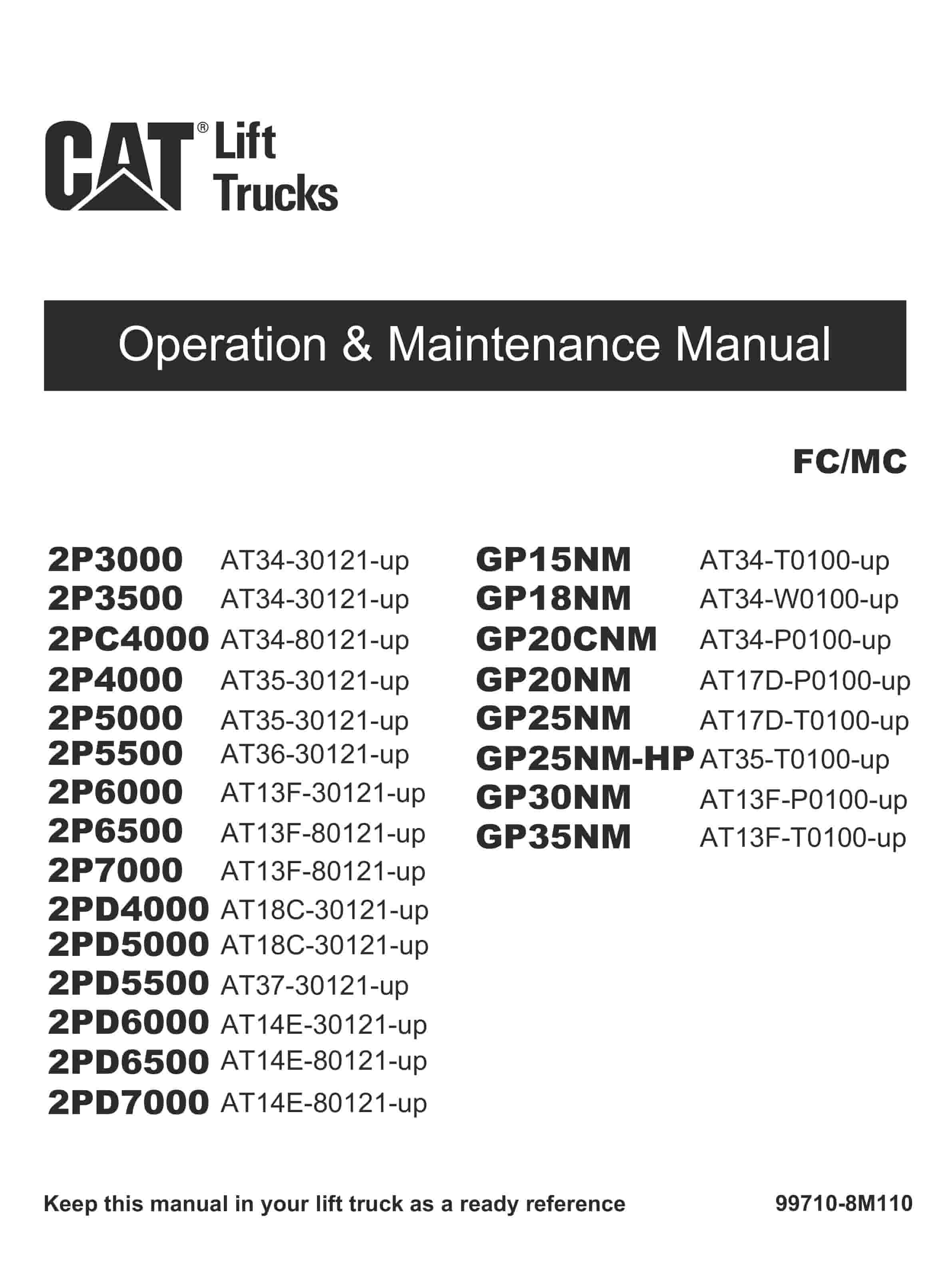
Caterpillar 2P3000 to 2PD7000, GP15NM-35NM Operation and Maintenance Manual 99710-8M110
$30.00 Add to cart -
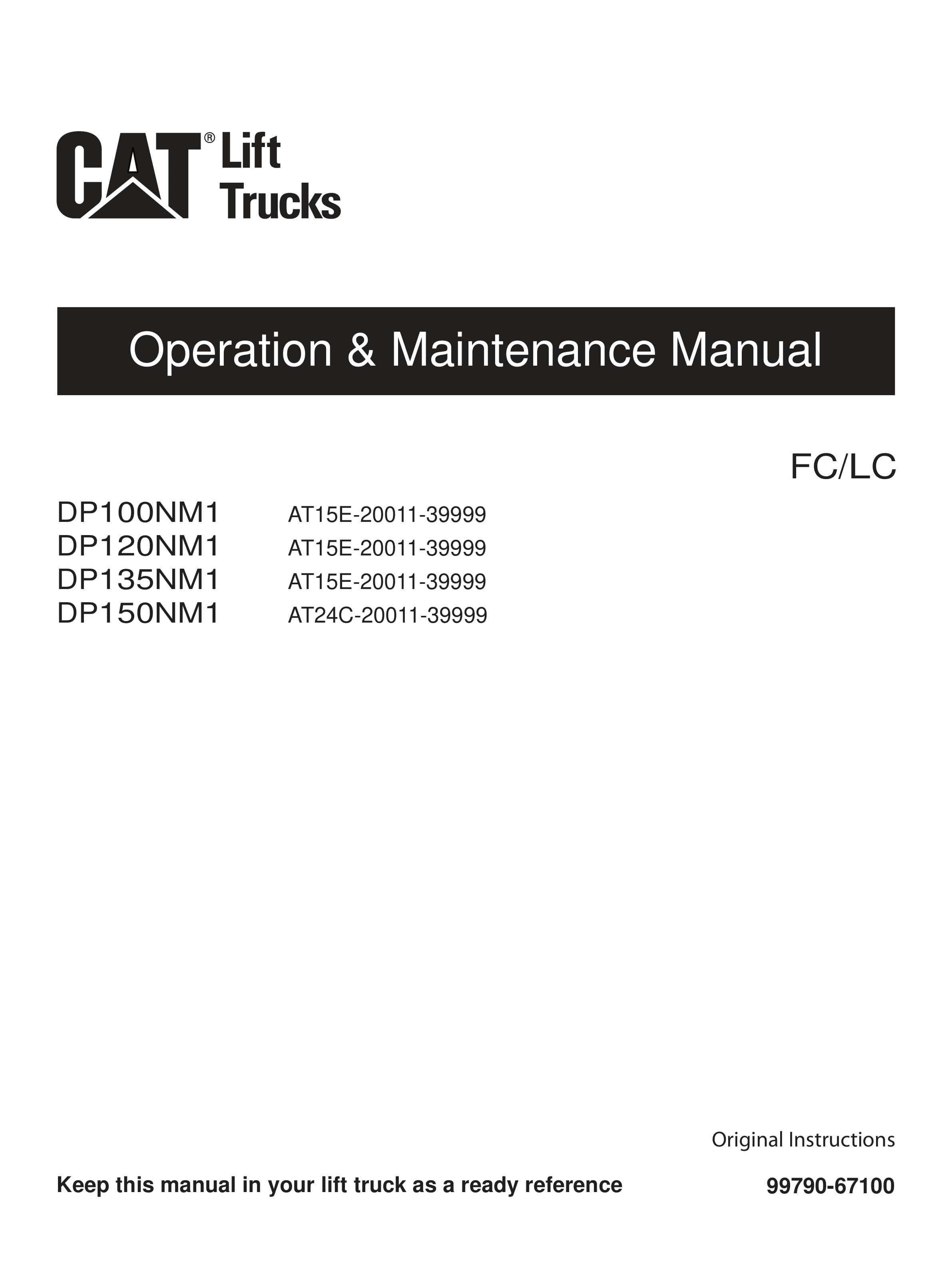
Caterpillar DP100NM1, DP120NM1, DP135NM1, DP150NM1 Operation and Maintenance Manual 99790-67100
$30.00 Add to cart -
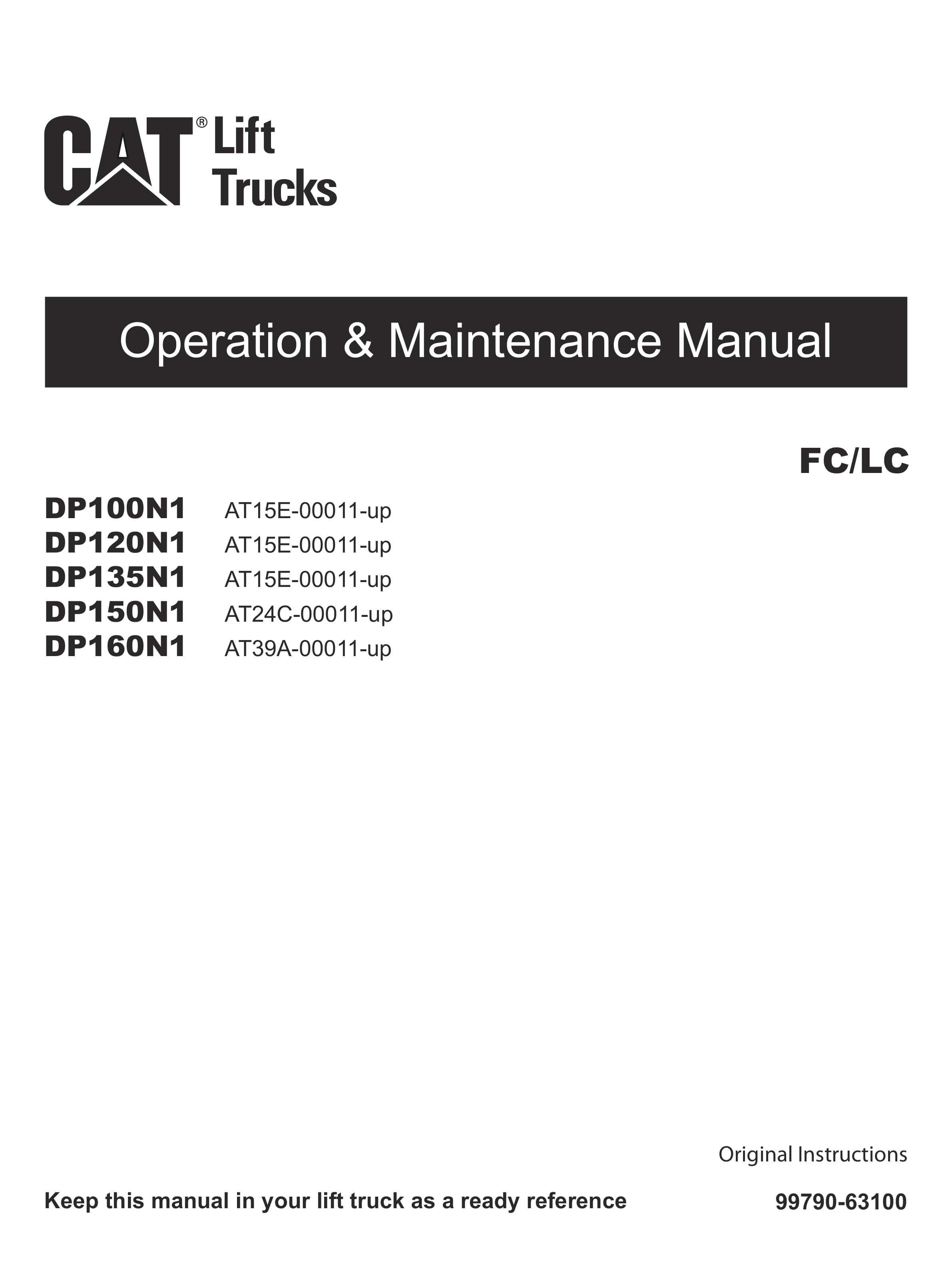
Caterpillar DP100N1, DP120N1, DP135N1, DP150N1, DP160N1 Operation and Maintenance Manual 99790-63100
$30.00 Add to cart -
Caterpillar 2C7000 – 2C8000-SWB Lift Trucks Operation and Maintenance Manual OCFAA-AC1F2-200
$30.00 Add to cart -
Caterpillar DP100NM1 to DP150NM1S Operation and Maintenance Manual 99790-47120
$30.00 Add to cart


